|
A coat of arms is the graphic symbol of a family.
It is a historical symbol which is part of a system of identification which has endured all social and
political upheavals for hundreds of years, spanning dozens of generations.
The bearing of a coat of arms is a great and
positive influence on a family because, for its very purpose, it represents family unity. It gives
the individual a sense of place and belonging to a family. It encourages the social structure of
family, its values, Godly honour and service to society.
As a coat of arms is displayed, it serves as a
constant reminder to bearers of that name of their ongoing responsibility, adding meaning and
honour to their family name. It graphically represents a proud relationship with your family's
heritage. It serves as a visible reminder of a relationship between past, present and future
generations to have a history, adding new values to today's life.
Displaying a coat of arms one calls one's own
can only increase its meaning, its value, and its influence. It adds honour and recognition to the
original bearer of the arms. What greater honour by man could be bestowed upon an original bearer
than to assure its continuance and influence with present and future generations?
What is a Coat of
Arms?
The concept of a coat of arms came from the
knight’s suit of armour. As that was metal, it would get quite hot or cold depending on the
weather, so they wore a garment over the armour and often a smaller cloth over the
helmet.
When visors were added to helmets, creating a
need for an identifying design, one place to put it was on the shield, and the other was on that
garment, which could be called a tabard or coat. Another place to have an identification symbol was
on top of the helmet. Soon the design comprised the design on the shield, with the mantle above and
around it representing the garment, then the helmet above that with a wreath or torse to hold the
helmet cloth, and finally any additional item fixed to the helmet.
It was pictorial, as literacy was unusual a
thousand years ago, but many added a motto if they wished.
Elements of a Coat of Arms
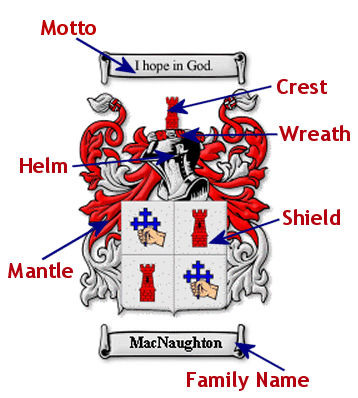
The coat of arms is an identifiable set of symbols that signify a family name,
at least during modern times.
In times past, a coat of arms might vary between different members of a family.
Sometimes, more than one family would use the same coat of
arms.
The elements of a coat of
arms represent the different parts of the ceremonial clothing worn by a knight in battle or
a in tournament, that is, the helmet and crest, the shield and the
cloak.
Motto
The motto is a slogan or motivating
philosophy for a family. It is part of the official blazon. It is part of the design
devised by the original author of the coat of arms.
The banner, placement of the words, and font
style for the words are up to the artist.
Crest
Family crests can be used independently, but
they are also an essential component of the coat of arms. The crest is whatever appears above
the helmet in the coat of arms.
For example, a lion, or buck, or dragon. A
crest might be made of wood, metal, or boiled leather and worn on the knight's helmet, or on a
belt. The crest is part of the official blazon.
Shield
The shield is also part of the official
blazon of a coat of arms. The colors and the charges (i.e., the figures upon the shield) are
also part of the blazon.
However, the shape of the shield is not. So
the shape may vary from artist to artist. Sometimes different shapes can also signify different
geographical origins or the time period.
Helm
The helm, or helmet, is NOT part of the
official blazon, and may vary with the wearer's rank. It can also vary depending on the century
represented or even the artist's preference.
The closed
visor facing left that is pictured in the example above represents the rank of an
esquire.
Wreath
The wreath, which is also known as the
torse, was worn around the top of the helmet. Made of two pieces of silk twisted together in
real life, the wreath was given to a knight by a lady who selected him for her
knight.
The wreath is NOT part of the official
blazon.
Mantle
The mantle, or mantling, is NOT part of the
official blazon, although the colors may be. This part of the coat of arms represents the
mantle, or cloak, worn by a knight.
It would have hung from the helmet and
protected the knight. In the coat of arms, the mantle is often represented by leaves woven in
and around the other elements.
Have you looked to see if we have yours on our
system?
Is Your Name Here?
|